| Attribute | Details |
|---|---|
| Release Year | 1999 |
| Director | David Fincher |
| Main Cast | Edward Norton, Brad Pitt, Helena Bonham Carter |
| Genre | Drama, Thriller, Psychological |
| Runtime | 139 minutes |
| Language | English |
| Based On | Novel by Chuck Palahniuk |
| IMDB Rating | 8.8/10 |
| Key Themes | Identity, Consumerism, Masculinity, Rebellion |
Fight Club, a cult film directed by David Fincher and based on the book of the same title by Chuck Palahniuk is a 1999 film that has remained a captivating movie to audiences across the world. The film presents a dark psychological aspect of identity, consumerism, masculinity and rebellion. Fight Club, with its shocking twists, multidimensional characters, and stylistic shooting, has become the staple in the contemporary movie discourses.
Plot Overview
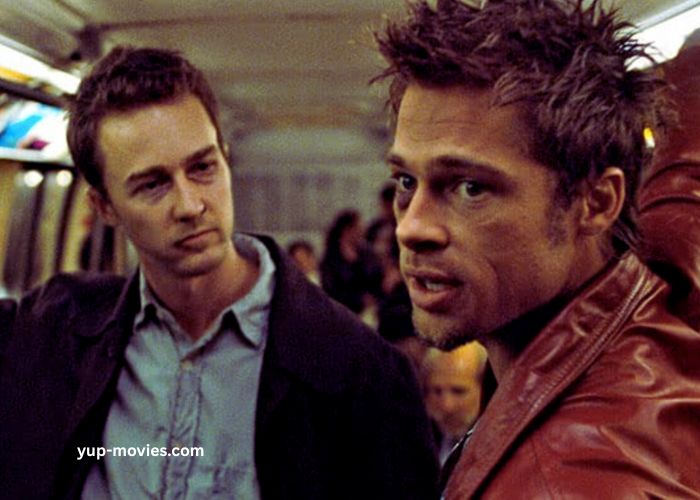
The protagonist of the story, who is unnamed, is an ordinary, white-collar worker, Edward Norton, and the main character, who is bored with his life and cannot sleep. He is unfulfilled with his consumerist existence, so he encounters the mysterious Tyler Durden, who is depicted by Brad Pitt. The two form an underground fight club in which men get to deal with their frustrations physically. The more the club turns into a subversive sub-organization, which questions the norms in the society, the more the film explores the psychology of its characters, with a mind-twisting twist that redefines all that viewers believed they knew about it.
Themes and Analysis
1. Identity and Duality
Fight Club is an excellence in exploring identity. The movie explores the division between the ordinary existence of the main character and the anarchic liberty of Tyler Durden. This duality challenges the societal definition of masculinity, and it is a challenge to the viewers to think about the masks which people can wear every day.
2. Critique of Consumerism
One of the themes that reoccur in Fight Club is anti-consumerism. Starting with IKEA adverts to high-end furniture frenzy, the movie brings out the tendency of consumer culture to put individuals into satisfaction loops. The words of Tyler Durden, The things you possess possess you, are familiar with those who doubt materialistic ways of life.
3. Masculinity and Rebellion
The film explores the concept of masculinity in the modern world by showing how men get to release their anger and frustration through underground fight clubs. Such scenes can be interpreted as the protest against social norms and can be regarded as the comment on the meaning of finding your identity in a conformist society.
Cinematography and Style
The directorial work of Fincher and the cinematography of Jeff Cronenweth make it a dirty, touchy experience. The psychological tension of the film is supported with the help of dark lighting, cut-ups, and brand new special effects such as the so-called single-frame subliminals. The rough, disorganized visual aspects of the film reflect the dualism of the story and its social commentary.
Performances
Brad Pitt plays Tyler Durden in a rebellious and unpredictable role with charismatic and anarchic performance. The internalized nature of Edward Norton is matched with the energy of Pitt and forms a dynamic relationship that propels the storyline. Helena Bonham Carter also serves as a very interesting love interest as Marla Singer who is a complex character due to her involvement in the psychological process of the protagonist.
Cultural Impact
Fight Club has become a cult ever since its release, and it has brought up the debate about mental health, consumerism, and personal freedom. Its quotes, images, and themes have infiltrated popular culture and have become one of the most alluded movies in contemporary cinema. Although Fight Club was a controversial movie that was initially violence-filled and dark, it is remembered as a unique and timeless movie.
Why Fight Club Should Be Watched.
Fight Club is a film that has to be watched regardless of whether one is a psychology thriller or character driven stories fan or even a film that just rocks the social system. Its ability to strike its viewers, striking themes, and memorable performances make it not lose its importance even decades after its release.